with Richard Reynolds
More info to come.
with Richard Reynolds
More info to come.
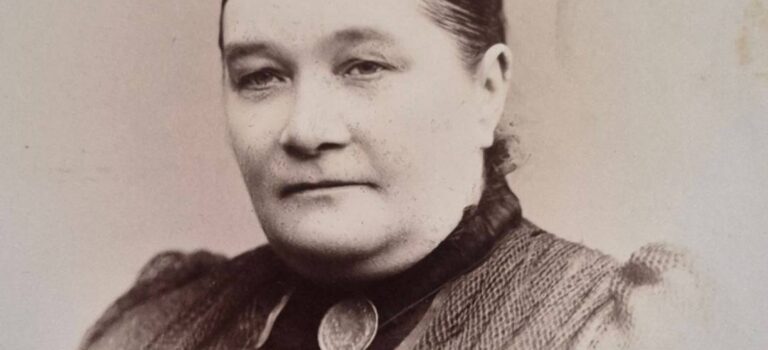
Annie Amos (née Fisher) was a Victorian heiress who had an extraordinary childhood. She married two Cambridge academics, and lived at Paston House, Bateman Street (now St. Mary’s School). Through her diaries, the tale of her truly remarkable life is now able to be told.
With Claire Martinsen
Date Tuesday 13 October 2026
Time 7:30pm – 9pm
Location Ross St Community Centre, Ross Street, Cambridge CB1 3UZ
Admission £3
with Deborah Thom
Date Tuesday 8 September 2026
Time 7:30pm – 9pm
Location Ross St Community Centre, Ross Street, Cambridge CB1 3UZ
Admission £3

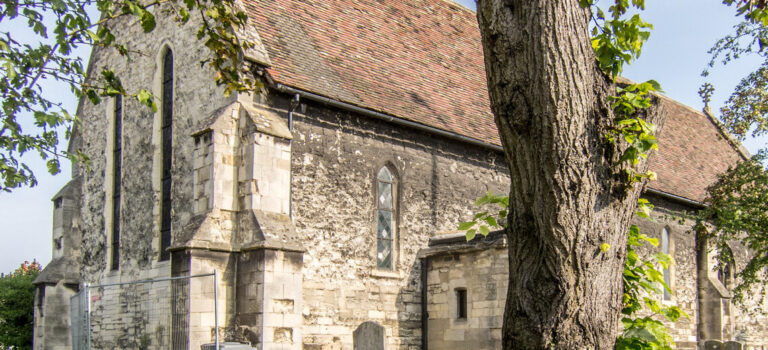
Barnwell Priory was founded in the days of crusading knights, and today its last buildings are fighting their own battle for survival. Tonight’s talk is in two parts: the first tells the story of the Priory’s first years, and the second outlines what the St Andrew the Less Community Project is doing to ensure the continuation of this important part of Cambridge’s heritage.
Established first on a small piece of flat land beneath Cambridge Castle and the River Cam, and then transferred some twenty years later to the outskirts of the town, Barnwell Priory was not only one of the very earliest Augustinian foundations in England, but amongst the richest and best documented.
The Cambridge antiquary and Fellow of Trinity College, John Willis Clark, first noticed its importance over a century ago, and it was Clark who edited the first seven books of the manuscript known as the Liber Memorandum Ecclesie de Bernewelle in 1907. This covers the early history of the house and includes its foundation myth, its second foundation, and some very biased accounts of the thirteenth-century litigation between, amongst others, the Priory, the town burgesses, and the local population.
Covering the period from its foundation in 1092 to c.1294-95, it is a shame that the manuscript was either discontinued or any extension was lost. Despite this, we are fortunate that a plethora of other forms of documentation do survive through which to showcase the importance of this under-researched and neglected religious house.
Jac (Jacqueline) Harmon
Jac is a retired higher education administrator, formerly having worked at Trinity Hall, University of Cambridge. She is now a freelance writer and researcher, working on a historical novel. She is a trustee of the Foundation for Medieval Genealogy and volunteers for the National Trust at Anglesey Abbey, where she works alongside the Collections team.
Maria Cleminson
Maria read history at Oxford, where her biases were towards the middle ages and ecclesiastical history. Before moving to Cambridge career in journalism, communications, fundraising and, latterly, project development in Tajikistan. Now she has settled in Cambridge, as well as bringing up three young children, Maria is throwing herself into community life, leading on the St Andrew the Less Community Project, initiating biodiversity projects with the Riverside Area Residents Association and standing in May’s local elections.
This talk takes place at Ross Street Community Centre which is fully accessible. Doors open at 7pm and the talk starts at 7:30pm. Tea and bscuits provided. Admission £3.
Note as audience numbers are unpredictable we urge people to arrive early so as not to be turned away if we reach capacity.
Date Tuesday 14 July 2026
Time 7:30pm – 9pm
Location Ross St Community Centre, Ross Street, Cambridge CB1 3UZ
Admission £3
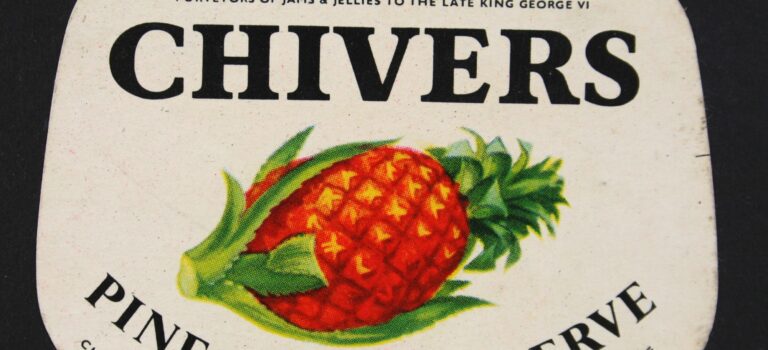
Through an engaging presentation of historical records and captivating photographs, local historian Eleanor Whitehead will provide a fascinating glimpse into the social history of the era. The talk will highlight Chivers and Sons’ technical achievements, including ground-breaking quality control measures, Europe’s first large-scale canning operations in the 1890s, the development of vegetable canning in the 1930s, and their support for fruit cold storage research during the 1920s.
Chivers labelled products are no longer found on British supermarket shelves which is a great shame considering their manufacturing legacy. When the Chivers farming family decided to enter the preserves market in 1873 during a plum fruit glut they took product quality (lack of notorious Victorian additives) very seriously. Within 20 years they were the European leader in fruit bottling, canning as well as jellies and jams. They went on to perfect the canning of vegetables in 1930, were joint founders of Birdseye and developed the first palatable dehydrated potato product remembered as POM the forerunner of Smash. Until the mid-1950s the family-owned company bought from multiple independent fruit growers north of Cambridge to supplement their own fruit production. Their Huntingdon factory was supplied by local vegetable farmers supported by company fieldsmen. The success of the firm could be put down to their innovative production methods and the hundreds of patents granted over 86 years.
This talk takes place at Ross Street Community Centre which is fully accessible. Doors open at 7pm and the talk starts at 7:30pm. Tea and bscuits provided. Admission £3.
Note as audience numbers are unpredictable we urge people to arrive early so as not to be turned away if we reach capacity.
Date Tuesday 9 June 2026
Time 7:30pm – 9pm
Location Ross St Community Centre, Ross Street, Cambridge CB1 3UZ
Admission £3
The Mill Road History Society invites you to bring an old toy or something related to childhood along to Ross Street Community Centre and to give us a short history of it and what it means to you. Members of the committee will be bringing some of their favourite objects but we welcome contributions from our members as well.
Don’t be shy, come along and join in. You are, of course, also welcome to just come and listen. Note we won’t be recording this event so whatever you tell us will just be for the evening’s audience.
This event takes place at Ross Street Community Centre, a fully accessible venue, and is open to all. Doors open at 7pm, the AGM starts at 7:30pm and the talk starts at 7:45pm. Admission £3 unless you plan to speaking in which case entrance is free.
If you are thinking of bringing an object then it would be helpful if you could email admin@millroadhistory.org.uk beforehand so we know numbers but feel free to just turn up.
Date Tuesday 12 May 2026
Time 7:30pm – 9pm
Location Ross St Community Centre, Ross Street, Cambridge CB1 3UZ
Admission £3
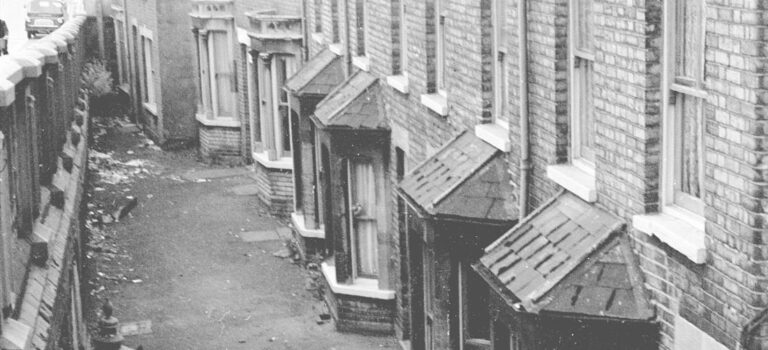
Using family photographs, letters and other personal memorabilia, Philip Attwood will discuss his experience of living in a terraced house facing directly on to the side of the old Mill Road Bridge in the early 1960s. Situated between the railway line and Argyle Street, these houses lacked what the Mill Road History Project Building Report rightly calls “the comparative grandeur” of the surviving railway cottages on the Petersfield side of the railway and have long since been demolished. The Mill Road life that will be presented included daily walks to and from Romsey County Primary School and regular visits to the public baths and the library the other side of the railway. As well as personal memories of the house, the school and the Mill Road area, this talk will also offer insights into the history of what was once known as Measham Terrace and the sorts of people who lived there over the years.
Philip Attwood worked in the British Museum’s Department of Coins and Medals from 1979 until 2020, serving as Keeper of Coins and Medals from 2010. He has been Honorary Curator of the Worshipful Company of Cutlers’ medal collection since 1996. He has written many books and articles on commemorative medals from the Italian Renaissance up to contemporary art medals and is currently working on a book on the sculptor and medallist Frank Bowcher (1864-1938).
This talk takes place at Ross Street Community Centre which is fully accessible. Doors open at 7pm and the talk starts at 7:30pm. Tea and bscuits provided. Admission £3.
Note as audience numbers are unpredictable we urge people to arrive early so as not to be turned away if we reach capacity.
Date Tuesday 14 April 2026
Time 7:30pm – 9pm
Location Ross St Community Centre, Ross Street, Cambridge CB1 3UZ
Admission £3
Come join us for a hands-on community mapping event led by urban scholar Dr Zhuozhang Li of the Department of Architecture, working in collaboration with the Mill Road History Society. Zhuozhang is a member of the Community Design Research Lab and the Cambridge Room. Using creative participatory mapping, we’re exploring what Mill Road means to the people who live, work, and spend time here—and we invite you to join in.
Workshop During the workshop, you’ll fill out a short survey and help map out the spaces, activities, and social connections that shape everyday life on ‘your’ Mill Road. It’s a chance to share your perspective and see how it fits into the bigger picture. This builds on earlier data collected during the Mill Road Winter Fair and all contributions will be added to a large, evolving community map.
If you can’t make it to the workshop then you can fill out the survey beforehand, see the link below.
Talk After the workshop, Zhuozhang will give a talk about this creative mapping approach—how it helps uncover the stories, networks, and experiences that often go unseen. He’s interested in “knowledge co-production,” where local voices help shape how people and places co-create new ways of knowing and (re)imagining the city. The project also looks at how mapping can be a powerful, accessible tool for representation and social justice.
After the Festival, the final Community Map will be on display at the Cambridge Room and shared online via the Cambridge Room, Capturing Cambridge and Mill Road History Society websites.
Venue Mill Road Community Centre
Date March 24th, 2026
Time Workshop: 6:00–7:45pm, Talk: 8:00–9:00pm
Cost Free

Our February talk will be given on Zoom by Honor Ridout on the subject of Stourbridge Fair.
The Stourbridge Fair, out on the Cambridge boundary, was the great event of the year for Cambridge folk and for others, over hundreds of years. Across the harvested fields this valuable market sprang up each September bringing people and goods from far and wide, with the exchange of thousands of pounds in cash and promises. The little community at Barnwell, opposite the old Priory gate, was a cente of hospitality for the travellers, as well as storage for the great booths that had to be put up along the main streets of the Fair.
It was when I became Tourist Officer for Cambridge City Council that I applied my love of history to the city and its past both town and gown. I qualified as a tour guide and in later years also taught evening classes on Cambridge and other history subjects. I was particularly interested in finding out about the Stourbridge Fair, mentioned in all the histories but without much detail. When the friends of the Leper Chapel decided to celebrate the Fair each September, I joined in, to give short talks about it.
This talk takes place on Zoom. Details will be sent to our Mailing List the day before the talk.
Date Tuesday 10 Feburary 2026
Time 7:30pm – 9pm
Location Zoom
Cost Free
You can watch the recording of the talk here or on our YouTube channel.

Come and find out about the local people who lived in Mill Road – stories of the mill, murder, wartime bombs and a German spy. Discover Cambridge’s first public library, bath house, workhouse and much more. After the arrival of the railway, this street was a place where you could get everything, from birth to death. Learn how to uncover the hidden marks previous inhabitants left behind – and perhaps share some memories of your own.
Start: 10.30am at the junction of Mortimer Road and Mill Road.
The tour, which lasts approx. 90 mins, is led by Green Badge Guides, Sophie Smiley and Veronica Speirs. The route is accessible to all.
Price £15 per adult, children under 16 free. Places are limited. Please pay by bank transfer in advance or cash on the day. Book via: sophie.smiley@gmail.com